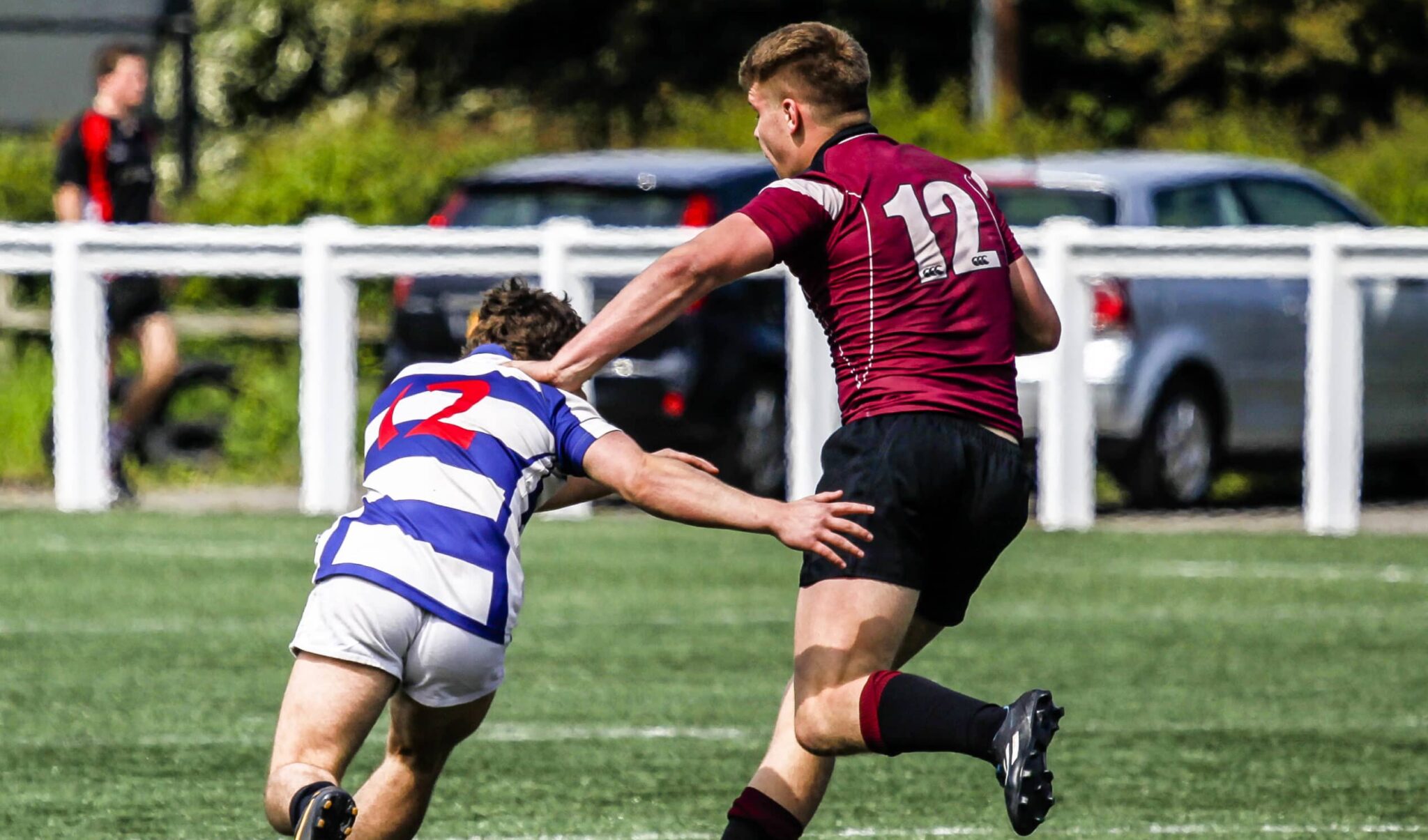
Using Tribe365®’s 2 Laws of Human Action to Deliver Performance in a Sports Team

Watch any sports team in trouble and you’ll notice the body language goes before the results do. Heads drop, shoulders slump, passes get safe. The talent hasn’t vanished overnight, so what’s actually changed? Belief has. Tribe365®’s 2 Laws of Human Action explain why, and a squad is one of the clearest places on earth to see them at work. This is a niche case study: we’ll stay on the touchline rather than in the boardroom, because sport strips human behaviour back to something you can watch in ninety minutes. If you lead people anywhere, the dressing room is a brilliant teacher.
Key Takeaways
- The 2 Laws of Human Action are simple: people act based on what they Believe, Think, Feel and Act (BTFA™), and behaviour follows belief. Change the belief and the behaviour follows.
- Task cohesion, the shared belief in a common goal, correlates with team performance at r = 0.45, far stronger than social cohesion at r = 0.11 (Filho et al., meta-analysis, 2014).
- Collective efficacy, a team’s shared belief that it can succeed, predicts performance more strongly than the sum of each player’s individual self-belief (systematic review, 2021).
- The same laws govern the workplace, where only 21% of employees are engaged (Gallup, 2025). Sport is just the most visible version of the problem.
Summary based on Tribe365®’s 2 Laws of Human Action and sport-psychology research on cohesion and collective efficacy.
What are Tribe365®’s 2 Laws of Human Action?
The 2 Laws of Human Action are the foundation of how Tribe365® explains behaviour. Law one: every action a person takes flows from what they Believe, Think, Feel and Act, the chain we call BTFA™. Law two: behaviour follows belief, so if you want different action, you start with belief, not with shouting about the action. These aren’t motivational slogans. They’re a model of cause and effect.
BTFA™ matters because most leaders try to fix things at the wrong end. They see a poor tackle, a missed deadline, a flat performance, and they correct the action. But the action is the last link in the chain. By the time a player switches off in the seventieth minute, the belief that “we can win this” went hours, days or weeks earlier. Want the full theory? That sits in our main 2 Laws of Human Action guide. Here we’re zooming in on one arena where the laws are impossible to miss.
How does BTFA™ explain what a team does on the pitch?
BTFA™ explains on-pitch behaviour as a sequence: what a squad believes shapes what it thinks in the moment, which shapes how it feels, which finally drives how it acts. A team that believes it belongs at the top thinks “we’ll find a way”, feels calm under pressure, and acts decisively. Flip the belief and every link downstream flips with it.
Picture two squads of identical ability, one point apart. The first believes it’s a top-half side having a bad run. The second believes it’s a relegation side hoping for luck. Same fixtures, same training ground, wildly different behaviour. Why? Because belief sets the thinking, and thinking sets everything that follows. The collective-efficacy research backs this up: a team’s shared belief that it can cope with demanding conditions predicts performance, and performance then feeds back to strengthen that belief in a loop (collective efficacy in soccer teams, systematic review, 2021). The loop runs both ways, which is exactly why a confident team’s good week snowballs and a fragile team’s bad week spirals.

Notice what good coaches actually do in the huddle. They rarely list tactical instructions in those final seconds. They reset belief. “This is our pitch.” “We’ve earned the right to be here.” They’re not being soft. They’re working at the top of the BTFA™ chain, where the leverage is, because they know the legs follow the belief.
Why does behaviour follow belief in a squad?
Behaviour follows belief because you can’t sustainably force action that contradicts what someone privately holds to be true. You can drill a player to press for one match, but if they don’t believe the press will work, they’ll stop pressing the moment they get tired or go a goal down. Belief is what keeps the behaviour going when nobody’s watching and the scoreboard says give up.
This is the trap with the classic half-time rocket. A manager rages, the players go out fired up, and for ten minutes the behaviour changes. Then it reverts, because the underlying belief never moved. Has a borrowed emotion ever lasted you a full week? It rarely lasts a team a full half. The lesson for any leader is uncomfortable: lasting change in what people do always runs through what they believe. That’s slower work than a rousing speech, but it’s the only work that holds. It’s the same principle behind releasing high performance in individuals, where sustainable output starts with mindset, not pressure.
What do the stats say about belief, cohesion and winning?
The data is clear that shared belief in the task, not just liking each other, is what moves results. A landmark meta-analysis found task cohesion correlates with performance at r = 0.45 (a large effect), overall cohesion at r = 0.34, and purely social cohesion at only r = 0.11 (Filho et al., 2014). In plain terms: a squad that shares a belief about what it’s trying to do outperforms one that merely gets on well.
Sit with that gap for a moment. Social cohesion barely registers on its own, while task cohesion does most of the heavy lifting. It tells you something Tribe365® has argued for years: a friendly culture isn’t the goal, a believing culture is. Team nights out are pleasant, but they won’t save you if nobody shares a belief in where the season is heading. The workplace parallel is direct, and we’ll come to it, because only 21% of employees worldwide are engaged at work (Gallup, 2025) and most of that gap is a belief gap, not a perks gap.
How do you set belief in a team that’s lost confidence?
You set belief by making the “why” concrete and shared, not by demanding more effort. When a team has lost confidence, telling it to “want it more” works at the wrong end of the BTFA™ chain. Instead you rebuild belief deliberately: agree what the team stands for, what standout behaviour looks like, and what has to happen every single day to earn the result. Belief is built in the boring repetition, not the big speech.
In practice, that means three honest conversations. Why does this club matter, to us and to the people who follow us? What would the best version of this team actually do, on and off the pitch? And what’s the daily standard, the non-negotiable, that turns that picture into habit? When players help shape those answers rather than receive them, the belief becomes theirs. A belief you helped build is one you’ll defend when you’re two down with twenty minutes left. This is the heart of real team development: not a one-off workshop, but a shared standard the group owns and keeps choosing.
There’s a leadership trap worth naming here. Coaches and managers often assume the belief is shared because they hold it. It rarely is. Self-awareness is rarer than we think: Harvard Business Review research found only 10 to 15% of people genuinely meet the criteria for self-awareness, even though around 95% believe they’re self-aware (HBR, 2018). A leader who can’t see the gap between their belief and the team’s belief can’t close it.
How do BTFA™ stages map onto a sports squad?
Mapping the four BTFA™ stages onto a squad shows you exactly where performance leaks. The same stage looks calm and decisive in a confident team and tense and hesitant in a struggling one. The table below is a diagnostic: read down the column that matches your group, and you’ll usually spot which stage broke first. Where would your team sit right now?
| BTFA™ stage | What it means in a squad | In a struggling squad | In a high-performing squad |
|---|---|---|---|
| Believe | The shared conviction about what the team is and where it’s going | “We’re not really good enough.” Hope, not belief. | “We belong here and we’ll find a way.” Quiet certainty. |
| Think | The in-the-moment reading of a situation | “Here we go again” when the first goal goes in. | “Plenty of time, stick to the plan.” Clear and composed. |
| Feel | The emotional state belief and thought produce | Anxious, tight, afraid of the mistake. | Calm, switched on, free to take a risk. |
| Act | The visible behaviour everyone judges | Safe passes, dropped heads, no second runs. | Brave on the ball, relentless off it, supports each other. |
The crucial point is the direction of travel. You don’t fix the bottom row by coaching the bottom row. You fix it by working up at the top row. A team that acts with fear is a team that believes it’s going to lose, so that’s where the intervention has to land. Coach the belief, and the calmer thinking, steadier feeling and braver action follow it down the chain.
What can workplace managers learn from the dressing room?
Workplace managers can learn that performance is a belief problem long before it’s a skill problem. The dressing room just makes it visible faster. In an office, a team that’s quietly stopped believing in the strategy looks busy for months before the numbers admit it. On a pitch, you see it by half-time. Same laws, slower feedback. So what’s leaking in your team that you can’t yet see on a dashboard?
That’s why Tribe365® treats belief as something to measure, not assume. The collective-efficacy research is blunt: a team’s shared belief in itself predicts results better than adding up everyone’s individual confidence (systematic review, 2021). You can’t manage what you can’t see, and most leaders have no read on their team’s shared belief at all. They find out when someone resigns, the same way a manager finds out at full time. The fix is the same in both worlds: surface belief early, while you can still act on it.
This is exactly what the Tribe365® app is built for, at £10/month per user. Two-minute daily reflections turn belief, alignment and engagement from a gut feeling into something you can see drifting before it costs you a result or a person. It’s the dashboard a coach wishes they had at 3pm on a Saturday, available every day of the week.
Want the shared language that sets belief from day one?
Start with the free HI-PB’S™ Self-Leadership Workbook, the same framework we use to turn passion into performance.
Get the free HI-PB’S™ Self-Leadership Workbook Book a callHow is this different from a one-off motivational team talk?
It’s different because a motivational team talk targets feeling, while the 2 Laws target belief, and only belief holds. A rousing speech borrows emotion for an afternoon. Setting belief changes the source the emotion comes from, so the lift sustains itself long after the speaker has left the room. One is a sugar rush. The other is a diet.
You can see the difference in how long the effect lasts. The motivated team starts fast and fades when reality bites. The believing team absorbs setbacks, because the belief was never propped up by the scoreline in the first place. McKinsey-style change data and the engagement numbers tell the same story in the workplace: lift without belief reverts. If you want the behaviour to stick, you have to do the slower, deeper work on what the group actually holds to be true. That’s the whole reason Tribe365® exists, and why we’d rather help you build a believing culture than sell you a one-off pep talk.
2 Laws of Human Action in sport: FAQ
What are the 2 Laws of Human Action?
The 2 Laws of Human Action are Tribe365®’s model of behaviour. Law one: people act based on what they Believe, Think, Feel and Act, the BTFA™ chain. Law two: behaviour follows belief, so lasting change in what people do starts with what they believe, not with correcting the action itself.
What does BTFA™ stand for?
BTFA™ stands for Believe, Think, Feel, Act. It describes the sequence behind every action: belief shapes thinking, thinking shapes feeling, and feeling drives behaviour. In a sports team it explains why a confident squad and an anxious one of equal ability behave so differently under the same pressure.
Why does belief matter more than effort in a team?
Belief matters more because you can force effort for one match but not sustain it without belief. Research shows task cohesion, a shared belief in the goal, correlates with performance at r = 0.45, far above social cohesion at r = 0.11 (Filho et al., 2014). Shared belief is what keeps effort going when the scoreboard turns against you.
Does this only apply to sport?
No. Sport just makes the laws visible by half-time, while a workplace can hide a belief problem for months. The same dynamics govern any team, which is why only 21% of employees are engaged globally (Gallup, 2025). Managers can use the dressing room as an accessible model for performance anywhere.
How do you measure belief in a team?
You measure belief through frequent, low-friction reflection rather than annual surveys. The Tribe365® app captures two-minute daily reflections at £10/month per user, rolling them into a dashboard that surfaces shifts in belief, alignment and engagement early, before they show up in results or resignations.
Summary: belief first, behaviour follows
A struggling team’s problem is almost never the talent on the teamsheet. It’s the belief underneath it. Tribe365®’s 2 Laws of Human Action explain why: people act based on what they Believe, Think, Feel and Act, and behaviour follows belief. Work at the top of that BTFA™ chain and the braver action follows. Shout at the bottom of it and you’ll get ten good minutes, then the old habits back.
Sport shows this faster than anywhere, which is exactly why it’s such a useful model for the workplace. Set the belief, make it shared, measure it before it drifts, and the performance takes care of itself. People in great spaces, who believe in where they’re heading, do great things, whether the pitch is a stadium or an office.
Ready to turn belief into performance across your team?
See how the Tribe365® app and culture work fit together, or talk it through with us.
Book a call Explore team development
Written By Oliver Randall


Oliver is one of the Tribe365 ® founding members and has forged a career on finding passion in everything he does. Until the work with Tribe365 ® he never really understood it, and has found his real passion is unlocking the true passion and enjoyment in everyone around him.